Screens are not all the same activity
A quiet audiobook, a video call with family, a demanding work thread, and a fast-moving social feed can create very different evenings. Brightness matters, but so do emotional intensity, notifications, and the time an activity displaces. Treating every device as the enemy often leads to rules that are hard to keep. It is more useful to identify which part of your screen use makes it harder to transition out of the day.
Find the point where the evening extends
Notice whether you tend to keep working, scrolling, or responding beyond the time you had intended to stop. That may be a cue to create an off-ramp rather than a total ban. You could charge a phone away from the bed, turn off work alerts after a chosen hour, switch from a demanding app to a calmer activity, or put tomorrow's task list on paper. Choose a boundary that still works on an ordinary night.
Make the room support the boundary
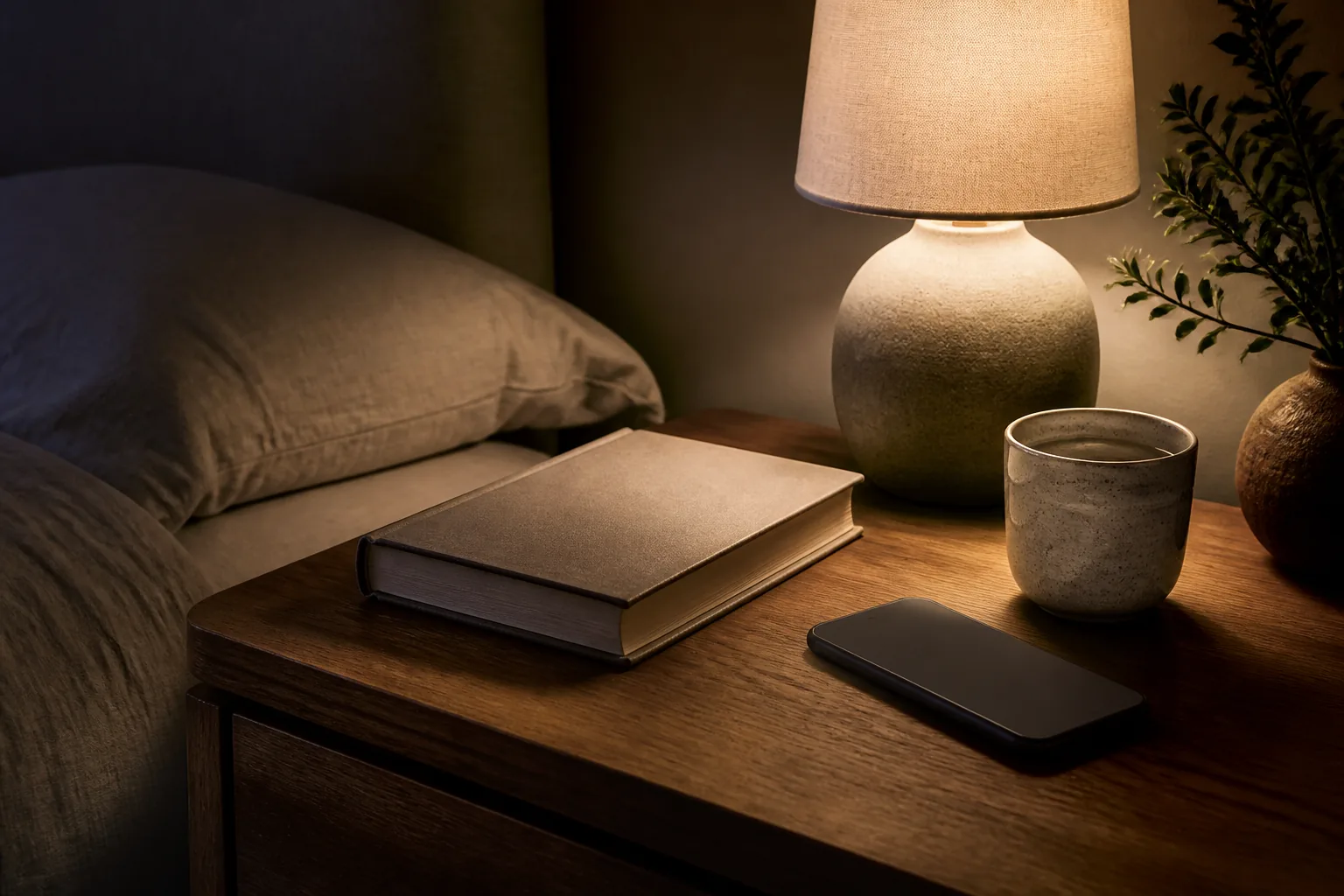
A device placed beside the pillow is easy to reach when sleep is uncertain. Moving it to a desk, shelf, or charger across the room creates a small pause before opening it again. Pair that pause with something you actually enjoy: a book, a shower, music at a comfortable volume, or preparation for tomorrow. The point is not deprivation. It is to make the final part of the evening less reactive.
Keep perspective when sleep is difficult
A screen boundary may be helpful, but it is not a guaranteed solution for persistent insomnia or another health concern. If sleep remains difficult or affects daytime life, seek individual guidance from a qualified health professional. DreamVanta's role is to offer practical educational ideas, not diagnose or prescribe.